

Portugal
Azores
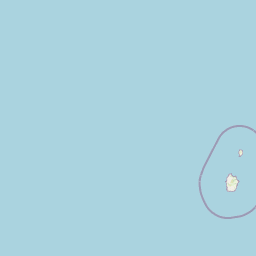
The Azores are the North Atlantic's most spectacular archipelago, nine volcanic islands rising from the sea midway between Europe and America. São Miguel, the largest island, is an explosion of tropical greenery, emerald caldera lakes, bubbling geothermal springs and cliffs lined with blue hydrangeas. It's Europe's wildest, best-preserved nature destination.
Azorean cuisine is deeply tied to the volcanic land and the Atlantic. Cozido das Furnas (a stew slow-cooked in Furnas' geothermal earth), sopa de couve e chouriço, alcatra (beef stew in Terceira red wine), fresh fava beans, aged São Jorge cheese (the finest of the Portuguese islands) and Azorean pineapple (grown in geothermally-heated greenhouses) are flavors found nowhere else on earth.
The Azores are an outdoor-activity paradise. Whale watching (Europe's best spot, with 24 recorded species), hiking the calderas of Sete Cidades and Faial, surfing São Jorge's waves, diving crystal-clear waters among manta rays and turtles, and soaking in the thermal lagoons of Ferraria make for an exceptional eco-tourism offer.
Practical tip: São Miguel island is the gateway, with direct flights from Paris and Lisbon. Rent a car, since public transport is limited. The weather is fickle — be ready for rain and sun on the same day. Whales are seen May to October, peaking in June-July.
What to do in the Azores in 3 days?
Spend the first day at the Sete Cidades lakes, Ponta Delgada, whale watching and Lagoa do Fogo; the second at Furnas and its geysers, the Terra Nostra thermal pools, Caldeira Velha and surfing/diving; the third at Angra do Heroísmo and Flores island. This pace covers the essentials of São Miguel with side trips to neighboring islands. Find these 10 places in order below, with practical details for each.
What budget should you plan for a trip to the Azores?
Budget around €90-120 per day per person for activities, meals and transport (accommodation not included): €12-18 for a seafood meal, with car rental as the main expense (€30-50/day, nearly essential), and €40-60 for a whale-watching trip. The Azores remain more affordable than mainland Portugal thanks to small local restaurants.
When is the best time to visit the Azores?
The best time is May to September, with whale watching peaking in June-July. The weather stays unpredictable year-round (rain and sun on the same day), so pack a waterproof jacket whatever the season.
How do you get around the Azores?
Renting a car is practically essential, since public transport is very limited between sites (Sete Cidades, Furnas, Lagoa do Fogo). To reach the other islands (Flores, Terceira), a SATA Air Açores flight from Ponta Delgada is required.
Prices and hours are indicative — please verify before your visit.
Ideally, plan 4 days to explore Azores. The best time to explore Azores remains May to September. Do not miss Sete Cidades Lake, whale watching, Furnas, the city's unmissable highlights — you can book your tickets directly online  →.
NavorAI Videos
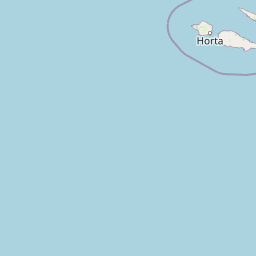
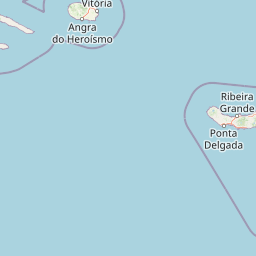







10 places to visit


The Sete Cidades Lakes
Sete Cidades sits at the bottom of a giant caldera formed roughly 5,000 years ago when an ancient volcano, once topping 800 meters, collapsed — a crater so vast (12km in circumference) that it now holds an entire village with its fields and its twin lakes of contrasting color, the Lagoa Verde and the Lagoa Azul, separated by a narrow 19th-century road bridge. Local legend has it the two lakes owe their distinct colors to the tears of a green-eyed princess and a blue-eyed shepherd, separated by a king who refused their love, each weeping on their own side until they formed the two lakes. The Miradouro da Vista do Rei, reached after a 2km hike from the village or directly by car, offers the most photographed viewpoint in the Azores. In July-August, the roads ringing the crater are lined with blue hydrangeas, planted in the 19th century by early settlers to mark field boundaries.
30 minutes by car from Ponta Delgada via the EN1-1, or regional bus from Ponta Delgada's terminal.


Ponta Delgada
Ponta Delgada, granted town status in 1546 by King John III of Portugal and since the archipelago's administrative capital, owes its remarkably orderly street plan to methodical rebuilding after the devastating 1522 earthquake that leveled Vila Franca do Campo, then the island's capital, prompting authorities to move the seat of power to Ponta Delgada. Its three iconic black-basalt arches, the Portas da Cidade, were erected in 1783 as a ceremonial gateway from the harbor and remain the city's visual symbol. The mother church of São Sebastião, built from 1531 in a late Manueline style, holds an exceptional Baroque interior entirely covered in polychrome azulejos and 17th-century gilded woodwork. The Carlos Machado Museum, housed in a former Franciscan convent, traces the archipelago's unique natural and artistic history.
João Paulo II airport is 10 minutes from downtown by taxi; the historic center is entirely walkable.

Whale Watching
The Azores owe their status as the world's top cetacean-watching destination to a unique geographic position at the crossing of plankton-rich Atlantic currents that attract both year-round resident species (sperm whales, dolphins) and migratory visitors passing through (blue whales, fin whales, humpback whales), bringing the total recorded species in the archipelago's waters to 24 — a world record. Until the 1980s, these same waters were the setting for artisanal harpoon whaling from rowboats, a practice that officially ended in 1987; the old land-based lookout posts that once coordinated whalers now use the same method, guiding tourist whale-watching boats by radio toward pods of cetaceans, pushing the trip success rate above 90% between May and October. Former whale-processing plants, like the one at Porto Pim on Faial, have been converted into museums recounting this history.
Boats depart from Marina Pêro de Teive in Ponta Delgada; online booking recommended.

Lagoa do Fogo
Lagoa do Fogo ('fire lake'), formed by the collapse of a volcanic cone during a 15th-century eruption, sits at the center of a strict nature reserve created in 1981 — Portugal's highest level of environmental protection — where native Macaronesian vegetation, nearly wiped out elsewhere on the island after centuries of farming-driven deforestation, still survives intact. Perched at 590 meters and frequently shrouded in mist, the lake is only fully visible on clear days, which makes every appearance all the more spectacular. The trail down to the small black volcanic-sand beach by the water (about 1 hour from the Miradouro) is steep but manageable for most hikers, and swimming is allowed outside protected bird nesting periods.
25 minutes by car from Ponta Delgada; park at Miradouro da Lagoa do Fogo, then a 1-hour hike down to the lakeshore.

Furnas and Its Geysers
Furnas, nestled at the bottom of another volcanic caldera on eastern São Miguel, owes its fame to spectacular geothermal activity: dozens of fumaroles and bubbling springs, the hottest reaching 100°C, burst forth right in the heart of the village amid sulfurous steam reminiscent of Iceland. It's in this scorching ground that locals bury sealed pots each morning containing cozido das Furnas — a meat-and-vegetable stew slow-cooked for six to seven hours by geothermal heat alone, a culinary tradition unique in the world, documented since the 19th century. Restaurateurs collect the pots by late morning, retrieving them straight from the fumaroles of Parque das Furnas. The village, on the shore of a caldera lake popular for trout fishing, also has several free-access iron-rich springs along its promenade.
45 minutes by car from Ponta Delgada via the EN1-1, or regional bus (about 1 hour from Ponta Delgada).

Terra Nostra Thermal Pools
Terra Nostra Park in Furnas was founded in 1780 by Thomas Hickling, a wealthy American merchant settled in the Azores, who laid out an English-style garden — fashionable at the time — around his summer residence, one of the very first ornamental botanical gardens in Europe still in operation. Bought and expanded in the 19th century by the Viscount of Praia, a botany enthusiast who imported hundreds of exotic species (tree ferns, camellias, azaleas, giant sequoias), the park now spans 12.5 hectares. At its center, a 35-meter thermal pool, continuously fed by a natural iron-rich spring at 39-40°C with its characteristic orange color, allows year-round swimming in water renowned for easing rheumatism.
In the heart of Furnas village, 45 minutes by car from Ponta Delgada; main entrance on Rua Padre José Jacinto Botelho.

Caldeira Velha
Caldeira Velha, nestled in lush forest along the road leading to Lagoa do Fogo, is a natural thermal waterfall fed by a volcanic spring whose mineral-rich water flows out at around 38°C, right at the foot of a waterfall tumbling through dense subtropical vegetation of ferns and hydrangeas. The site, fitted with wooden walkways and a safe bathing pool without losing its wild character, is known for its small size and intimate atmosphere compared to Furnas' larger pools, making it a favorite stop at the end of a hike. The water leaves a light orange iron deposit on skin and swimwear, a phenomenon common to all of the island's volcanic thermal springs. The site sometimes closes temporarily after heavy rain due to flash-flood risk in the narrow ravine.
20 minutes by car from Ponta Delgada on the Lagoa do Fogo road (EN5-2A); small on-site parking, modest entry fee.

Surfing and Diving
Santa Bárbara beach, on São Miguel's north coast near Ribeira Grande, is directly exposed to Atlantic swells, making it the Azores' most famous surf spot and host of a professional World Surf League stop since 2019 — recognition that put the archipelago on the global surfing map. Beneath the surface, the archipelago's crystal-clear volcanic waters, free of terrigenous sediment, offer visibility that can exceed 30 meters, exceptional for the North Atlantic. Dive sites around the Formigas islets and the Princesa Alice Bank, midway between São Miguel and Santa Maria, are world-renowned for regular encounters with giant manta rays passing through between June and October. Water temperature, tempered by the Gulf Stream (18-23°C), allows diving without a thick wetsuit even in winter.
Santa Bárbara beach in Ribeira Grande, 25 minutes by car from Ponta Delgada, with surf schools on site.

Angra do Heroísmo
Angra do Heroísmo, founded in the 15th century on Terceira island and, from the 16th century onward, the mandatory Atlantic stopover for Spanish and Portuguese fleets returning laden with gold and spices from the Americas and the Indies, was the de facto capital of the entire Azores archipelago for over four centuries. Its honorific title of Heroísmo was granted in 1837 by Queen Maria II in recognition of the city's resistance to absolutist troops during the Portuguese civil war, when the city, then the kingdom's last liberal stronghold, held out under siege for several years. Named a UNESCO World Heritage Site in 1983 for its Manueline and Baroque civil and religious architecture, the city was nonetheless almost entirely rebuilt after the devastating 1980 earthquake, restored with such care that it shows no visible break from the historic urban fabric. Monte Brasil, an extinct volcano overlooking the bay, holds the fortress of São João Baptista, one of the largest 16th-century fortifications of the Portuguese crown.
SATA flight from Ponta Delgada (45 min) to Terceira airport, then 15 minutes by car or taxi to the historic center.

Flores Island
Flores, found uninhabited by Portuguese navigators in the 15th century and named for the profusion of wildflowers then covering its slopes, is today recognized as a UNESCO Biosphere Reserve for the exceptional preservation of its volcanic landscapes, shaped roughly 700,000 years ago. The westernmost point in Europe, the island packs seven deep-blue caldera lakes and dozens of waterfalls into just 140km², including the spectacular Cascata do Poço da Alagoinha, which plunges straight into a swimmable natural pool. Black-volcanic-stone villages with colorful roofs, like Fajãzinha or Fajã Grande, sit on narrow flat strips of coastal land called 'fajãs,' formed by ancient cliff collapses gradually reclaimed by vegetation. The island is visited almost exclusively by rental car, as public transport is virtually nonexistent.
SATA Air Açores flight from Ponta Delgada airport (1h15), several flights a week depending on season.
Partner links: NavorAI may earn a commission, at no extra cost to you.
Specialities to try
Cozido das Furnas
Meat and vegetable stew cooked for hours in the volcanic ground.
São Jorge cheese
Aged cow's milk cheese with a sharp taste (PDO).
Azores pineapple
Grown in greenhouses on São Miguel, small and very fragrant.
Grilled limpets (lapas)
Limpets grilled with garlic and butter, by the ocean.
Bolo lêvedo
Lightly sweet muffin-like bread, a speciality of Furnas.
Where to try them
Furnas
Thermal village where the cozido is lifted from the steaming ground.
Ponta Delgada market
Mercado da Graça: local fruit, cheese and pineapples.
Fishing harbours
Catch of the day and limpets in the island's small harbours.
Our practical tips
Rent a car as soon as you land — public transport is very limited and most major sites (Sete Cidades, Furnas, Lagoa do Fogo) aren't served outside a few tourist buses.
Pack a waterproof jacket and layers — Azorean weather can change several times a day, with rain and sun alternating within hours even in summer.
Book whale watching for early morning — morning trips offer calmer seas and better odds of spotting cetaceans before the wind picks up.
Bring a dark swimsuit for the thermal baths — the iron-rich water at Furnas and Terra Nostra permanently stains light-colored fabric.
Plan at least 5-7 days to explore several islands — inter-island SATA Air Açores flights are frequent but book up ahead in peak season.
Reserve your cozido das Furnas the day before — the best restaurants bury their pots early in the morning and only prepare a limited number each day.
Find your flight to Azores
Recommended airport: Ponta Delgada.

Prepare your stay
Stay connected during your trip

Need an airport transfer?
Want freedom to explore?

Keep exploring


