

France
Paris
Paris, the City of Light, is arguably the most beautiful city in the world. The global capital of art, fashion, and gastronomy, it enchants visitors with the sparkling Eiffel Tower, the treasures of the Louvre, and the bohemian lanes of Montmartre. Every arrondissement has its own character, iconic cafes, and hidden gems to discover.
Parisian cuisine is a world institution. Try a warm butter croissant from the neighborhood bakery, steak-frites in a century-old bistro, French onion soup at Les Halles, or the colorful macarons of Laduree. Markets like Marche d'Aligre or Marche des Batignolles overflow with fresh produce and authentic flavors.
Paris pulses with an incomparable energy between tradition and avant-garde. Jazz nights in Saint-Germain-des-Pres, gallery openings in Le Marais, underground clubs on the Right Bank, and dinners that stretch late on the terraces of Canal Saint-Martin create an atmosphere found nowhere else. Paris is as alive at night as it is by day.
Practical tip: Avoid July-August (crowds and heat) and favor April-June or September-October. The Paris Museum Pass gives skip-the-line access to over 50 museums, a must for art lovers.
What to do in Paris in 3 days?
Spend day one at the Eiffel Tower, the Musee d'Orsay, and Saint-Germain-des-Pres; day two at the Louvre, Sainte-Chapelle, Notre-Dame, and Le Marais; day three in Montmartre, at the Arc de Triomphe and the Champs-Elysees, then Versailles. This pace blends must-see monuments, museums, and lively neighborhoods without being too packed. Find these 10 spots in order below, with practical details for each.
What budget should you plan for a trip to Paris?
Budget around EUR130-160 per day per person for activities, meals, and transport (accommodation not included): EUR15-20 for a bistro lunch menu, EUR2.55 for a metro ticket (or the EUR12.30 Navigo Day pass), and EUR20-30 per major site, well worth it with the Paris Museum Pass. Paris is one of Europe's priciest capitals, alongside London.
What's the best time to visit Paris?
The best time is April to June or September to October, with mild temperatures and smaller crowds than summer. Avoid July-August if possible: lines at major sites grow considerably longer and the heat can make outdoor sightseeing uncomfortable.
How do you get around Paris?
The Paris metro (16 lines) is the fastest way to cover long distances: a metro ticket (EUR2.55) covers one trip, and the Navigo Day pass (EUR12.30) pays for itself from 5 trips onward. The historic center (Notre-Dame, Sainte-Chapelle, Saint-Germain-des-Pres) is very walkable.
Prices and hours are indicative — please verify before your visit.
Ideally, plan 4 days to explore Paris. The best time to explore Paris remains April to June. Do not miss Eiffel Tower, Louvre, Montmartre, the city's unmissable highlights — you can book your tickets directly online  →.
NavorAI Videos

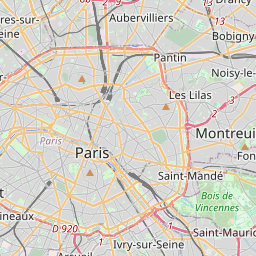


10 places to visit

The Eiffel Tower
The Eiffel Tower, built for the 1889 World's Fair and originally meant to be dismantled after twenty years, owes its survival to its radio antenna, deemed strategically valuable. Standing 330 meters tall and long the world's tallest structure, it weighs 10,100 tons and expands by 15cm in summer heat. Three levels are open to visitors: the first with its vertigo-inducing glass floor, the second offering the most photogenic view of Paris, and the summit, where Gustave Eiffel's reconstructed office can be visited. At night it sparkles for 5 minutes every hour thanks to 20,000 light bulbs - a free show visible from across Paris. Book your tickets online several weeks ahead: walk-up waits often exceed 2 hours without a reservation.
Metro line 6, Bir-Hakeim station, or RER C, Champ de Mars-Tour Eiffel station - 5 to 10 min walk.

Musee d'Orsay
The Musee d'Orsay, housed in the former Gare d'Orsay built for the 1900 World's Fair and later threatened with demolition before its conversion into a museum in 1986, holds the world's richest collection of Impressionist and Post-Impressionist art. Van Gogh (including his famous Starry Night Over the Rhone and several self-portraits), Monet, Renoir, Degas, Cezanne, and Manet are all gathered under the immense glass-and-iron nave of the former station, whose original metal structure remains visible. The station's large gilded clock, visible from inside the museum's cafe, frames a spectacular view over the Seine and the Louvre opposite. Allow 2.5 to 3 hours for a full tour of all five levels.
RER C, Musee d'Orsay station, or metro line 12, Solferino station - on the Left Bank of the Seine.


Saint-Germain-des-Pres
Saint-Germain-des-Pres, named after Paris' oldest church founded in the 6th century, was in the mid-20th century the cradle of existentialism and French intellectual life. Cafe de Flore and Les Deux Magots, where Jean-Paul Sartre, Simone de Beauvoir, and Albert Camus reshaped the world over a cafe-creme, still welcome writers and the curious in an almost-unchanged Art Deco setting. Shakespeare and Company bookshop, on the quays facing Notre-Dame, founded in 1951 in the tradition of the legendary original shop frequented by Hemingway and Fitzgerald in the 1920s, remains a pilgrimage site for lovers of English-language literature, with hidden beds among the shelves for traveling writers. Luxury boutiques and contemporary art galleries have since moved into the surrounding streets.
Metro line 4, Saint-Germain-des-Pres station - right in the heart of the neighborhood.

The Louvre
The Louvre, a 12th-century fortress turned royal palace and then a museum after the French Revolution in 1793, is the most-visited museum in the world with nearly 9 million annual visitors and over 35,000 works displayed across 60,600 sqm. Leonardo da Vinci's Mona Lisa, protected behind bulletproof glass in the Salle des Etats, draws dense crowds on its own; the Venus de Milo and the Winged Victory of Samothrace rank among the other must-see masterpieces. I.M. Pei's glass pyramid, unveiled in 1989 despite fierce controversy at the time, has itself become a Parisian architectural icon. Allow at least half a day, entering preferably via the Carrousel or Porte des Lions entrance to skip the pyramid line.
Metro lines 1 or 7, Palais-Royal-Musee du Louvre station - direct exit toward the pyramid.

Sainte-Chapelle
Sainte-Chapelle, built in the record time of under seven years under Saint Louis (Louis IX) and consecrated in 1248 to house Christ's Crown of Thorns, bought at great expense from the emperor of Constantinople, is considered one of the absolute high points of Rayonnant gothic art. Its upper chapel unfolds 15 stained-glass windows 15 meters tall, made up of over 1,100 biblical scenes from the 13th century, about two-thirds of which are original - an unmatched ensemble of medieval stained glass in scale and state of preservation anywhere in the world. On sunny days, the colored light flooding the nave creates a striking 'cage of glass and stone' effect, best visited in late morning when the sun hits the south-facing windows directly.
Metro line 4, Cite station, or RER B/C, Saint-Michel Notre-Dame station - within the Palais de Justice grounds.

Notre-Dame de Paris
Notre-Dame de Paris, built between 1163 and 1345 on the Ile de la Cite, the capital's historic birthplace, is the jewel of French gothic architecture and one of the most-visited monuments in Europe - until the devastating fire of April 15, 2019 destroyed its spire and much of its medieval timber frame. Its restoration, a extraordinary project followed by the whole world and led by artisans using original-era techniques, was completed with its reopening in December 2024. Its 13th-century rose windows, gargoyles, and facade with three sculpted portals have regained their full splendor. The zero-point marker of France's road network, engraved in the pavement of the forecourt, marks the official spot from which all distances from Paris are measured.
Metro line 4, Cite station, or RER B/C, Saint-Michel Notre-Dame station - on the Ile de la Cite.


Le Marais
Le Marais, literally 'the marsh' after land once drained by monks, is one of the few Paris neighborhoods to escape Baron Haussmann's 19th-century redevelopment, preserving an exceptional collection of 17th-century mansions. Place des Vosges, the oldest royal square in Paris, unveiled in 1612 and once home to Victor Hugo, is its architectural jewel, with 36 perfectly symmetrical brick-and-stone pavilions. Historically the Jewish quarter of Paris (the Pletzl, around Rue des Rosiers) and, since the 1980s, a major hub of LGBT culture, Le Marais today has an unmatched concentration of contemporary art galleries, independent designer boutiques, and trendy bars - on Friday and Saturday nights, the atmosphere is particularly electric.
Metro line 1, Saint-Paul station, or line 11, Hotel de Ville station.

Montmartre
Montmartre, a former winegrowers' village annexed by Paris in 1860, has kept the atmosphere of a hilltop hamlet perched on its 130-meter butte, the highest natural hill in the capital. The Sacre-Coeur Basilica, built of self-cleaning travertine stone between 1875 and 1914 as penance after the defeat of 1870, overlooks all of Paris from its forecourt - one of the finest free viewpoints in the city. Place du Tertre, just steps away, has gathered portrait painters for over a century, a legacy of the golden age when Picasso, Renoir, and Toulouse-Lautrec had their studios here. Cobbled lanes like Rue Lepic, where Van Gogh once lived, and the urban vineyard on Rue Saint-Vincent complete this village within the city, still surprisingly untouched by tourist crowds.
Metro line 12, Abbesses station (then funicular or stairs), or line 2, Anvers station.

The Arc de Triomphe and the Champs-Elysees
The Arc de Triomphe, commissioned by Napoleon in 1806 to celebrate his military victories but only completed in 1836, rises 50 meters and bears the engraved names of 660 generals and 128 battles of the Empire. Beneath its vault has rested, since 1920, the Unknown Soldier of World War I, whose flame is rekindled every evening at 6:30pm in a public ceremony. Twelve avenues radiate from the Place de l'Etoile surrounding it, including the Champs-Elysees, nicknamed 'the world's most beautiful avenue', which runs 1.9km down to Place de la Concorde past luxury boutiques, cinemas, and cafes - it's also where the July 14th parade and the Tour de France finish each year. The arch's rooftop platform offers one of the best perspectives on Paris' historic axis.
Metro lines 1, 2, or 6, Charles de Gaulle-Etoile station - access to the arch only via the underground passage, never cross the square at street level.

Versailles
The Palace of Versailles, transformed by Louis XIV from 1661 onward from a simple hunting lodge into Europe's largest royal residence, symbolized French absolutism for a century before hosting the signing of the treaty ending World War I in 1919. The Hall of Mirrors, 73 meters long and lined with 357 mirrors, remains one of the most photographed rooms in the world. The Grand Apartments and the French-style gardens designed by Andre Le Notre, with geometric flowerbeds, ponds, and groves across 800 hectares, showcase the Sun King's grandeur. The Grandes Eaux Musicales, on weekends from April to October, bring the fountains to life to baroque music - a memorable show worth planning around.
RER C to Versailles Chateau-Rive Gauche station - about 40 min from central Paris, then a 10 min walk.
Partner links: NavorAI may earn a commission, at no extra cost to you.
Specialities to try
Croissants & pastries
All-butter and flaky, best bought in the morning from a neighbourhood bakery.
Ham & butter baguette
A crusty baguette with ham and butter: the Parisians' favourite sandwich.
Cheese board
Camembert, Comté, Brie, goat's cheese… enjoyed with a glass of wine.
Steak-frites & bistro classics
Steak-frites, beef bourguignon, onion soup: the great bistro classics.
Crêpes
Sweet with butter and sugar or Nutella, from a street stand or a crêperie.
Where to try them
Rue Montorgueil
Pedestrian street of cheese shops, pastry shops and cafés in the centre.
Marché d'Aligre
Lively, affordable market near Bastille, with its covered hall.
Le Marais
Falafel on Rue des Rosiers, bakeries and small bistros.
Our practical tips
A metro ticket (EUR2.55) covers one metro or RER trip (EUR2.05 by bus or tram), but the Navigo Day pass (EUR12.30) pays off from 5 trips in a day.
Visit the Eiffel Tower and the Louvre early morning or in the evening (the Louvre stays open until 9pm on Fridays) to avoid the midday crowds that pack the sites.
A lunch menu at a neighborhood bistro costs EUR15-20 versus EUR30+ in the evening - favor lunch to taste Parisian gastronomy without breaking the bank.
The Paris Museum Pass (2, 4, or 6 days) gives skip-the-line access to over 50 museums and monuments, including the Louvre and Versailles - worth it from 3 visits onward.
Watch out for pickpockets on the metro and around the Eiffel Tower/Sacre-Coeur, especially on line 1 and during rush hour - keep bags and phones in front of you.
For the best view of Paris without the Eiffel Tower line, climb to the top of the Arc de Triomphe or the Sacre-Coeur terrace at sunset.
Find your flight to Paris
Prices compared in one click.

Prepare your stay
Stay connected during your trip

Need an airport transfer?
Want freedom to explore?

Keep exploring


