

Spain
Valencia
Valencia is Spain's third-largest city, a sunny, welcoming Mediterranean city that has reinvented itself as a global capital of design and food. The birthplace of paella (Spain's national dish), Valencia buzzes with a unique energy blending centuries-old traditions with spectacular architectural modernity. Santiago Calatrava's City of Arts and Sciences and its urban Barceloneta-style beaches make Valencia one of the most vibrant cities on the Mediterranean.
Valencian cuisine is among the richest and most varied in Spain, blessed with an extraordinarily fertile huerta (market-garden plain) and a generous Mediterranean sea. Original paella valenciana (rice, chicken, rabbit, green beans and garrofó, saffron and paprika) at the restaurants of the Albufera, fideuà with shellfish, fresh horchata de chufa (tiger-nut drink) with its fartons, buñuelos de calabaza (pumpkin fritters) and churros for dessert are the city's signature flavors.
Valencia surprises visitors with its unmatched quality of life. The Turia Garden, the river's former bed converted into a 9km park after the catastrophic 1957 flood, crosses the city from east to west, linking the City of Arts to the historic center. The markets of La Bolsería and the Mercat Central, the beaches of Malvarrosa and Patacona reachable by tram, and the nightlife of the Carmen district make it a city to live in as much as to visit.
Practical tip: Real paella valenciana is eaten on Sunday at lunchtime at the restaurants along the Albufera — it's a Valencian social institution. Avoid the touristy downtown restaurants that serve frozen paella. Book the City of Arts and the Oceanogràfic online. The Mercat Central is closed on Sundays.
What to do in Valencia in 3 days?
Spend the first day at the City of Arts and Sciences, the Mercado de Colón, Las Fallas and the Mercat Central; the second at the Cathedral, the Carmen district, the Torres de Serranos and the Turia Garden; the third at the beaches of Malvarrosa and the Albufera. This pace blends futuristic architecture, food and urban beaches. Find these 10 places in order below, with practical details for each.
What budget should you plan for a trip to Valencia?
Budget around €80-100 per day per person for activities, meals and transport (accommodation not included): €15-20 for a real paella, €1.50 for a metro/tram ticket, and €30-40 for a combined City of Arts and Oceanogràfic ticket. Valencia remains more affordable than Barcelona or Madrid.
When is the best time to visit Valencia?
The best time is April to June, with mild temperatures before the summer heat and, in mid-March, the spectacular Las Fallas festival, worth the trip on its own for anyone who loves a big local celebration.
How do you get around Valencia?
The tram and metro (10 combined lines) cover the city well, including the beaches of Malvarrosa: a ticket costs about €1.50. The historic center (Cathedral, Carmen, Mercat Central) is very walkable or bikeable, since Valencia is a flat, cycling-friendly city.
Prices and hours are indicative — please verify before your visit.
Ideally, plan 3 days to explore Valencia. The best time to explore Valencia remains April to June. Do not miss City of Arts, Malvarrosa beach, the city's unmissable highlights — you can book your tickets directly online  →.
NavorAI Videos
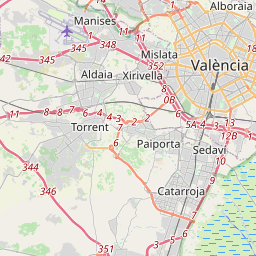


10 places to visit

The City of Arts and Sciences
The City of Arts and Sciences, designed by Valencian architect Santiago Calatrava and opened in phases between 1998 and 2005, occupies the former dry riverbed of the Turia, diverted after the catastrophic 1957 flood — a site municipal authorities had initially planned to turn into an urban freeway before a citizens' campaign forced its conversion into a cultural space instead. The Hemisfèric, an IMAX theater shaped like a giant eye whose mechanical eyelid opens and closes, was the first building completed, in 1998. The Oceanogràfic, designed by architect Félix Candela, is Europe's largest aquarium, with 42 million liters of water spread across ten distinct marine ecosystems, home to Spain's only dolphin show and a 70-meter underwater tunnel passing through a shark tank.
Tram line 4 or bus 35/95, Ciudad de las Artes y las Ciencias stop, 20 minutes from downtown.


The Mercado de Colón
The Mercado de Colón, an Art Nouveau covered market opened in 1916 in the then-booming, upscale Eixample district, was designed by architect Francisco Mora Berenguer as a true commercial cathedral for the neighborhood's newly affluent clientele, featuring an openwork steel structure, polychrome ceramics and two distinctive corner towers directly inspired by Gaudí's contemporary Catalan architecture. Threatened with demolition in the 1970s after a long commercial decline, it was saved just in time by a historic-heritage listing in 1983, then fully restored and reopened in 2003, this time converted into an upscale dining space rather than a traditional food market. Its central below-grade terrace, ringed by cafés and tapas bars, remains one of the city's most elegant meeting spots for an iced horchata in the afternoon.
Metro lines 3/5/9, Colón station, right in the Eixample district.


Las Fallas
Las Fallas de Valencia, said to originate from a tradition of carpenters burning their old tools at the spring solstice in honor of Saint Joseph, patron of carpenters, gradually grew from the 18th century into a monumental festival where hundreds of neighborhood committees, after a year of preparation and investments that can reach several hundred thousand euros, erect giant satirical papier-mâché sculptures wittily depicting the year's political and social events. Named a UNESCO Intangible Cultural Heritage in 2016, these temporary works of art are all burned in a single night, that of March 19th (La Cremà), except for one figure spared each year by popular vote. The 'mascletàs,' synchronized pyrotechnic blasts fired every day at 2pm, are felt physically in the chest by onlookers.
Historic center and Ayuntamiento, reachable by metro line 3/5, Xàtiva or Colón station.

The Mercat Central
Valencia's Mercat Central, opened in 1928 after fifteen years of construction delayed notably by World War I, is one of Europe's largest covered markets, spanning 8,000m² beneath a central dome rising 30 meters, topped by a bat-shaped weathervane — a bat being the emblematic animal of the Valencian royal coat of arms since the 13th-century Reconquest, according to local legend. Its Art Nouveau steel structure, blending wrought iron, polychrome ceramic and colored glass in the style typically called 'modernisme' in Valencia, houses over 400 stalls spread across two levels, some run by the same families for three or four generations. The market remains an essential part of daily life for Valencians themselves, its fishmongers offering the fresh catch from the nearby port of Gandía each morning.
Metro lines 3/5, Xàtiva station, or tram, right in the historic center.

The Cathedral and the Holy Chalice
Valencia Cathedral, whose construction began in 1262 on the remains of an Almohad mosque itself built over a Roman temple dedicated to Diana, illustrates through its layered styles — a Romanesque apse, a Gothic nave, an 18th-century Baroque façade — seven uninterrupted centuries of construction. Its Holy Chalice chapel has held since 1916 what many scholars and several popes, including John Paul II and Benedict XVI, who both celebrated Mass with it, consider to be the authentic chalice of the Last Supper — a 1st-century BC Middle Eastern agate cup set on a medieval gold, pearl-studded base, whose archaeological dating aligns with the era of Christ. The Miguelete, an octagonal bell tower completed in 1424, rises 51 meters after a climb of 207 steps.
Metro lines 3/5, Xàtiva or Colón station, 10 minutes on foot to Plaza de la Reina.

The Carmen District
El Carmen, the oldest neighborhood within Valencia's old walls, takes its name from the Carmelite convent established there in the 14th century, of which the restored church and cloister still remain. Its medieval alleys, laid out on the urban grid inherited from the Muslim period (Valencia was under Arab rule from 711 to 1238), still hold entire stretches of the 11th-century Arab wall in places. Long a rundown working-class neighborhood, it underwent gradual gentrification starting in the 1990s, driven by students and artists drawn by low rents, slowly turning its decaying Gothic palaces into art galleries and street-art studios — the district now holds one of the largest concentrations of urban murals in Spain, refreshed every year during the Poliniza festival.
Metro line 3/5, Àngel Guimerà station, or a 10-minute walk from the cathedral.

The Torres de Serranos
The Torres de Serranos, completed in 1398 to replace an older gate that had become too narrow for the growing medieval city, rank among the largest Gothic civic city gates still standing in Europe, having escaped the systematic demolition of Valencia's walls ordered in 1865 — only two of the twelve original gates, this one and the Torre de Quart, were spared, thanks to a campaign by local intellectuals. Used as a prison for high-ranking inmates from the 15th to 19th centuries, its dungeons still bear graffiti carved by prisoners. The kings of Aragon traditionally passed through these towers during their ceremonial entrance into the city, and they remain the symbolic starting point for several Fallas processions today. The rooftop terrace offers a rare view over the Turia riverbed and the cathedral.
Metro line 4, Alameda station, or a 15-minute walk from the cathedral via the Serranos bridge.

The Turia Garden
The Jardín del Turia, laid out from the 1980s on the dry riverbed left after the devastating flood of October 14, 1957, which killed around a hundred people, is the result of a historic citizens' movement: the Francoist government's original plan called for turning this 9km corridor into an urban freeway, a project abandoned after the 1970s campaign 'the Turia riverbed is ours and we want it green,' led by local residents. Today Spain's longest urban park, it runs through 18 different neighborhoods and, beyond its sports fields and botanical gardens, houses the huge Gulliver playground, a giant 70-meter slide-sculpture depicting Jonathan Swift's character shipwrecked and chained to the ground, which children have been climbing and sliding down since 1990.
Reachable on foot or by bike from anywhere downtown; it runs the length of the city.

Malvarrosa Beach
Malvarrosa beach, whose name likely comes from the wild roses that grew on its dunes before the seafront was built up at the turn of the 20th century, was the preferred summer retreat of Valencia's bourgeoisie from the late 19th century, as shown by the Art Nouveau villas lining some of the streets perpendicular to the beach. Ernest Hemingway stayed here several times in the 1920s-30s, a regular at the historic restaurant La Pepica, whose paella he praised in his writing, a patronage that helped build the restaurant's international fame. Its 4km of fine sand, redeveloped for the 1955 Mediterranean Games and again for the 2007 America's Cup, remain the essential Sunday gathering spot for Valencians, who come for a paella lunch on a terrace facing the sea.
Tram line 4 or 6 to Marítim-Serrería, then a 10-minute walk, or bus 32.

The Albufera
The Albufera, a 21km² freshwater lagoon separated from the sea by a dune strip called La Devesa, was named a natural park in 1986 after decades of pollution had threatened this ecosystem, essential to the survival of hundreds of migratory bird species. The rice paddies surrounding it, cultivated since the Moors introduced rice in the 8th century, are the direct origin of paella valenciana, a dish born in the 19th century among farm laborers who cooked, at midday, in a flat iron pan set over an orange-wood fire, whatever ingredients were locally available: rice, rabbit, chicken, snails and green beans. A traditional boat ride on the lake at sunset, when thousands of flamingos and herons return to their nests among the golden rice fields, remains one of the most memorable experiences in the region.
Bus 25 from Plaza de Ayuntamiento to El Palmar (45 minutes), or 25 minutes by car.
Partner links: NavorAI may earn a commission, at no extra cost to you.
Specialities to try
Valencian paella
The real one: chicken, rabbit, flat beans and garrofó, wood-fired, at lunchtime.
Horchata & fartons
Chilled tiger-nut drink served with long sweet buns.
Arroz a banda
Rice cooked in fish stock, served with aioli.
All i pebre
Eel stew with garlic and paprika, an Albufera speciality.
Esgarraet
Roasted pepper and shredded salt-cod salad with olive oil.
Where to try them
Central Market
Grand Art Nouveau market hall, among Europe's finest.
El Palmar (Albufera)
Rice-field village, cradle of paella, 20 km away.
El Cabanyal & Malvarrosa
Seaside district and beachfront, ideal for rice by the beach.
Our practical tips
Book your paella for Sunday lunch at a restaurant on the Albufera — it's the quintessential Valencian social ritual, best to reserve the day before.
Buy the combined ticket for the City of Arts and the Oceanogràfic online — the on-site queue can exceed an hour in peak season.
Rent a bike to ride the Turia Garden — a continuous 9km stretch crossing the whole city, the most enjoyable way to get around Valencia.
If visiting during Las Fallas (March), bring earplugs for the 2pm mascletàs — the noise is physically intense on Plaza del Ayuntamiento.
Try horchata de chufa with fartons at Horchateria de Santa Catalina rather than a touristy chain — the real recipe is far more subtle.
Avoid the paella restaurants right on the beachfront in Malvarrosa — the best addresses are often one or two streets back, cheaper and more authentic.
Find your flight to Valencia
Prices compared in one click.

Prepare your stay
Stay connected during your trip

Need an airport transfer?
Want freedom to explore?

Keep exploring


