

Italy
Puglia
Puglia is the most authentic and least touristy region of southern Italy, a land of charm and contrast between the Adriatic and Ionian seas. Its conical trulli in Alberobello (UNESCO), its masserie (fortified farmhouses turned luxury hotels), the baroque town of Lecce and its centuries-old olive groves make it an exceptional destination for travelers craving authenticity.
Pugliese cuisine is simple, generous and exceptionally good, a reflection of a land blessed with agricultural abundance. Orecchiette (little ears) with cime di rapa (turnip greens), creamy burrata from Andria, stracciatella, fried panzerotto, tiella di riso, patate e cozze (baked rice with potatoes and mussels), sheep's-milk cheeses and DOP extra-virgin olive oil — the best in Italy — are the pillars of a peasant cuisine elevated to art.
Puglia is best discovered slowly, by car, among centuries-old olive trees and whitewashed masserie. The markets of Bari, Lecce and Gallipoli overflow with extraordinary local produce. The rocky coast of Polignano a Mare with its dizzying coves, the white-sand beaches of the Gargano Peninsula and the Adriatic's turquoise waters are the region's seaside pleasures.
Practical tip: Rent a car — it's essential for exploring the region. Stay at a masseria for a unique taste of the Pugliese countryside. Local produce markets are open mornings only. Avoid Alberobello in July-August (overrun with tourists) — go for dinner instead, once the tour buses have left.
What to do in Puglia in 3 days?
Spend the first day at Alberobello, the Grotte di Castellana and Polignano a Mare; the second at Matera, the masserie, the ancient olive groves and Ostuni; the third at Lecce, the Adriatic Coast and Gallipoli. This pace covers trulli, baroque architecture, caves and coastline across the whole region. Find these 10 places in order below, with practical details for each.
What budget should you plan for a trip to Puglia?
Budget around €80-110 per day per person for activities, meals and transport (accommodation not included): €15-20 for a typical meal (orecchiette, burrata), with car rental nearly essential (€25-40/day), and €8-12 per site (Grotte di Castellana, Alberobello). Puglia remains more affordable than Tuscany or the Amalfi Coast.
When is the best time to visit Puglia?
The best time is May to September, with warm seas and dry weather ideal for combining villages and beaches. Avoid Alberobello in July-August if possible: the village is overrun by tour buses during the day, so go for dinner instead.
How do you get around Puglia?
Renting a car is essential to explore the region, since sights are scattered among villages, masserie and coastline. The train (Ferrovie Sud-Est line or Bari-Lecce) does connect Alberobello, Lecce, Ostuni and Polignano a Mare for those who'd rather not drive.
Prices and hours are indicative — please verify before your visit.
Ideally, plan 5 days to explore Puglia. The best time to explore Puglia remains May to September. Do not miss Alberobello, Lecce, Polignano a Mare, the city's unmissable highlights — you can book your tickets directly online  →.
NavorAI Videos
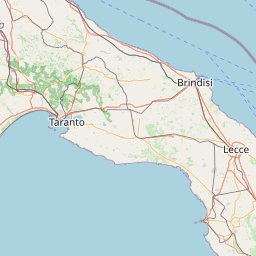
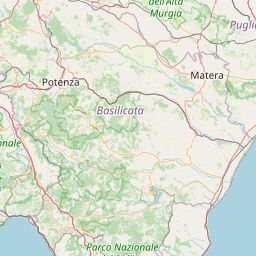
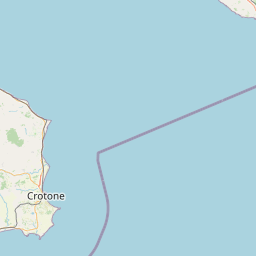
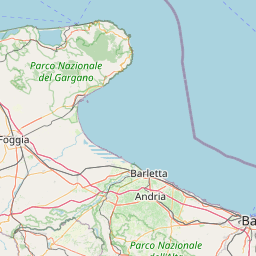
10 places to visit

Alberobello and Its Trulli
Alberobello, named a UNESCO World Heritage Site in 1996, owes the very existence of its roughly 1,500 trulli to a 15th-century tax dodge: local feudal lords, to escape the Neapolitan royal tax on any new permanent construction, required their peasants to build with dry limestone, without mortar, so the roofs could be dismantled within hours whenever a royal inspection was announced and rebuilt just as fast once the inspectors left. The Rione Monti district, which holds most of the trulli now converted into tourist shops, contrasts with the more authentic Aia Piccola quarter, where trulli are still lived in by real families. The conical roofs, often painted with white lime symbols, follow a folk tradition whose exact meaning remains debated between religious protection and local superstition.
Alberobello train station (Ferrovie Sud-Est line, about 1h30 from Bari), or 1 hour by car from Bari.

The Castellana Caves
The Grotte di Castellana, discovered by chance in 1938 by speleologist Franco Anelli, who rappelled down after spotting a gaping natural sinkhole in the countryside, form Italy's largest and most spectacular karst cave network, with over 3km of passages open across two routes (1 or 2 hours). The Grave, a 60-meter-deep open-air entrance sinkhole, gives way to a succession of chambers adorned with ancient stalactites and stalagmites, ending in the 'Grotta Bianca,' entirely lined with dazzling white alabaster and considered one of the most beautiful caves in Europe. The interior temperature, a stable 18°C year-round, makes it a refreshing escape in the height of the Apulian summer.
15 minutes by car from Alberobello; Castellana Grotte station on the Ferrovie Sud-Est line, then a 10-minute walk.


Polignano a Mare
Polignano a Mare, perched on a 20-meter limestone cliff directly above the Adriatic, owes its recent worldwide fame to two very different things: it's the birthplace, in 1928, of Domenico Modugno, singer-songwriter of 'Nel blu dipinto di blu' (Volare), whose bronze statue now gazes out to sea; and it's hosted a stop on the Red Bull Cliff Diving World Series every year since 2013, where divers leap from 27-meter platforms straight into the Lama Monachile cove, a beach spanned by a still-used 2nd-century Roman bridge. The medieval urban fabric of the historic center, a maze of white alleys pierced with terraces suspended over the void, has remained remarkably well preserved.
Polignano a Mare station on the Bari-Lecce line (30 minutes from Bari), center 5 minutes on foot.

Matera
Matera, considered one of the oldest continuously inhabited cities in the world (evidence of settlement dates back to the Paleolithic, roughly 10,000 years ago), owes its unique cave architecture — the Sassi, dwellings and churches carved entirely into the limestone tuff of two steep ravines — to millennia of adapting to an arid environment with no timber for building. Regarded until the 1950s as 'the shame of Italy' for the appalling living conditions of its poorest residents, which led the Italian government to order their forced evacuation in 1952, the city has since undergone a spectacular turnaround, named a UNESCO World Heritage Site in 1993 and European Capital of Culture in 2019, its cave dwellings now converted into boutique hotels and restaurants. Mel Gibson's The Passion of the Christ was filmed here in 2003.
1 hour by car from Alberobello or Bari (Ferrovie Appulo Lucane, direct line from Bari).

The Masserie
Puglia's masserie, fortified farmhouses built from the 16th to 18th centuries in response to relentless Barbary pirate raids along the Apulian coast, are recognizable by their thick perimeter walls, watchtowers and inner courtyards designed to shelter livestock and harvests in case of attack. Concentrated in the Valle d'Itria, a hilly region between Martina Franca, Cisternino and Locorotondo known for its whitewashed villages, most of these estates have been converted since the 1990s into charming boutique hotels or upscale agriturismi without altering their original architecture. Many still produce their own extra-virgin olive oil in mills sometimes centuries old, and offer tastings right in the original vaulted cellars.
Concentrated in the Valle d'Itria between Martina Franca, Cisternino and Locorotondo, 20-30 minutes by car from Alberobello or Ostuni.

The Ancient Olive Trees
The area between Ostuni and Monopoli, listed on Italy's national register of Monumental Trees, holds some of the oldest olive trees in the world, dated by dendrochronology at between 1,000 and, for the oldest specimens, over 3,000 years old — making them living witnesses of the Mycenaean Greek era. Their gnarled, hollow trunks, sculpted by centuries into contorted shapes sometimes evoking faces, have earned some of them proper names among locals. This ancestral olive grove, which still produces exceptional oil despite its age, is today threatened by the bacterium Xylella fastidiosa, a blight that emerged in 2013 and has already destroyed hundreds of thousands of olive trees in Salento, making the preservation of these centuries-old trees all the more precious.
Area between Ostuni and Monopoli, best explored by car along provincial road SP17.


Ostuni, the White City
Ostuni, nicknamed the Città Bianca for its houses entirely whitewashed with quicklime — an ancestral practice that, beyond aesthetics, disinfected façades against the plague and reflected the crushing Apulian summer heat — occupies a strategic position at 218 meters that once allowed pirate ships to be spotted approaching the coast from miles away. Its 15th-century Gothic cathedral, with a rose window façade unique in southern Italy, overlooks a maze of stepped alleys so labyrinthine it was deliberately designed to disorient would-be invaders. Below, the archaeological site where 'Ostuni 1' — the skeleton of a 25,000-year-old pregnant woman — was discovered in 1991 attests to human settlement dating back to the Upper Paleolithic.
Ostuni station on the Bari-Lecce line, then a shuttle or a 15-minute uphill walk to the historic center.

Lecce and Its Baroque Architecture
Lecce, nicknamed the 'Florence of the Baroque,' owes its architectural exuberance, unmatched in Italy, to pietra leccese, a soft golden local limestone that hardens on contact with air after extraction, letting 17th-century sculptors carve façades with an almost organic richness of ornament — garlands, cherubs, fantastical creatures and plant motifs in abundance. The Basilica of Santa Croce, the absolute masterpiece of this leccese baroque style, built over more than a century (1548-1646), has a façade so densely carved it's been compared to stone lace. Beneath Piazza del Duomo lie the remains of a 2nd-century Roman amphitheater, discovered only in 1901 during construction work — a reminder that Lecce was also a major Roman city long before becoming the baroque capital of Salento.
Lecce train station, direct connections from Bari (1h30); pedestrian historic center 15 minutes on foot from the station.

The Adriatic Coast
The Adriatic coast of Salento, between Otranto and Santa Cesarea Terme, alternates steep limestone cliffs plunging into translucent sea with fine-sand coves reachable on foot or by boat. Otranto, mainland Italy's easternmost town and thus the first place in the country to see the sunrise each morning, holds in its Romanesque cathedral an extraordinary 12th-century mosaic floor depicting a cosmological tree of life spanning over 700m². Baia dei Turchi, named after a 1480 Ottoman landing that cost the lives of 800 Otranto residents who refused to convert to Islam (now beatified as martyrs), is today one of Puglia's most photographed beaches, ringed by century-old umbrella pines.
45 minutes by car from Lecce toward Otranto; paid parking near the beaches in summer.

Gallipoli
Gallipoli, whose name derives from the Greek Kallipolis ('beautiful city'), sits on a rocky islet linked to the mainland by a 16th-century bridge, a defensive layout that made it one of the most fought-over ports on the Ionian Sea for centuries, ruled in turn by Byzantines, Normans, Angevins and Spaniards. Its 15th-century Aragonese castle, with clover-shaped bastions designed to withstand the era's modern artillery, still guards the entrance to the old harbor. In the 19th century the city was one of the world's largest exporters of lamp-grade olive oil, stored in vast frantoi ipogei — underground olive mills carved into the rock — several of which can still be visited beneath the old town's houses. Purità beach, right up against the city walls, offers rare urban swimming in the heart of the historic center.
40 minutes by car southwest of Lecce; Gallipoli station at the end of the line, 10 minutes on foot from the center.
Partner links: NavorAI may earn a commission, at no extra cost to you.
Specialities to try
Orecchiette with turnip greens
Handmade "little ear" pasta with cime di rapa and anchovies.
Burrata
Mozzarella with a creamy heart, born in Puglia.
Focaccia barese
Soft focaccia with cherry tomatoes and olives.
Panzerotti
Fried turnovers filled with tomato and mozzarella, Bari street food.
Pasticciotto
Shortcrust pastry filled with custard, a Lecce speciality.
Where to try them
Bari Vecchia
In the lanes, grandmothers shape orecchiette at their doorsteps.
Lecce
Baroque city of pasticciotti and Salento cooking.
Polignano & Monopoli
Seaside towns for raw fish and seafood.
Our practical tips
Rent a car to explore the Valle d'Itria and the masserie — the Ferrovie Sud-Est rail network serves the main towns but not the countryside.
Avoid Alberobello between 11am and 5pm in July-August — tour buses flood the village; go early morning or for dinner instead.
Spend at least one night at a masseria — the Pugliese countryside experience is worth it even just 30 minutes from the main towns.
Buy your olive oil directly at a masseria's frantoio (mill) — unbeatable quality and prices compared to tourist shops.
Book your spot on the Adriatic coast early in the morning in August — the most beautiful coves, like Baia dei Turchi, fill up fast.
Dine late like the locals (9-10pm) — the best local trattorias fill up after 8:30pm; before that it's quiet and touristy.
Find your flight to Puglia
Recommended airport: Bari.

Prepare your stay
Stay connected during your trip

Need an airport transfer?
Want freedom to explore?

Keep exploring


