

Portugal
Lisbon
Lisbon is Europe's most luminous capital, built across seven hills facing the Tagus estuary. Its historic Alfama and Graça neighborhoods, its blue-and-white azulejos, its miradouros with breathtaking views, and its iconic yellow tram all give it a beauty that's both nostalgic and vibrant. Birthplace of the great Portuguese maritime discoveries, it still holds the memory of a golden age when caravels set out to conquer the world.
Lisbon's cuisine is simple, generous and deeply tied to the Atlantic Ocean. Bacalhau (dried salt cod) prepared a thousand different ways, grilled sardines in summer, warm pastel de nata dusted with cinnamon, petiscos (Portuguese tapas) shared among friends and crisp vinho verde from the Minho are the capital's must-try flavors. Fado, a traditional song steeped in saudade, echoes every night in the tascas of Alfama and Mouraria.
Lisbon is best explored on foot and by tram, between steep climbs and panoramic miradouros. The Belém district, birthplace of the maritime discoveries, the Bairro Alto alive at night, and a day trip to Sintra with its romantic UNESCO-listed palaces shape an unforgettable stay. Lisbon's uniquely luminous light, reflected off the Tagus and the azulejos, has inspired generations of poets and artists.
Practical tip: Wear good shoes — the city is very hilly. Buy the Viva Viagem card for transport. Book your Sintra trip early in the morning. The Bairro Alto comes alive after 10pm for nightlife.
What to do in Lisbon in 3 days?
Spend the first day at the Torre de Belém, the Jerónimos Monastery and LX Factory; the second in Bairro Alto/Chiado, at Praça do Comércio, on Tram 28, at the Castelo de São Jorge and in Alfama; the third at the Oceanário de Lisboa and Sintra. This pace blends the golden age of discovery, historic neighborhoods and a romantic day trip. Find these 10 places in order below, with practical details for each.
What budget should you plan for a trip to Lisbon?
Budget around €70-95 per day per person for activities, meals and transport (accommodation not included): €10-15 for a petiscos meal, €1.65 for a tram/metro ticket (or the Viva Viagem card), and €10-15 per major site. Lisbon remains one of the most affordable capitals in Western Europe.
When is the best time to visit Lisbon?
The best time is March to May, with mild temperatures ideal for climbing the city's hills. Summer can be very hot and crowded, especially in Sintra, where lines grow considerably longer in July-August.
How do you get around Lisbon?
The historic tram network (including Line 28), the metro (4 lines) and funiculars cover this very hilly city well: the Viva Viagem card makes trips simple and affordable. For Sintra, the direct train from Rossio station (40 minutes) is essential.
Prices and hours are indicative — please verify before your visit.
Ideally, plan 3 days to explore Lisbon. The best time to explore Lisbon remains March to May. Do not miss Belém Tower, Alfama, Tram 28, the city's unmissable highlights — you can book your tickets directly online  →.
NavorAI Videos

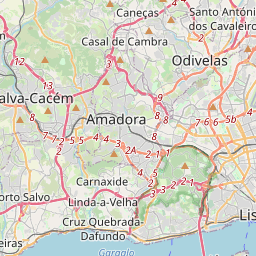


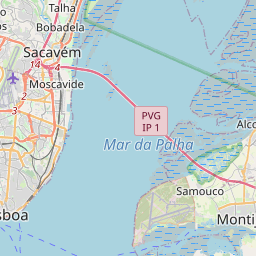


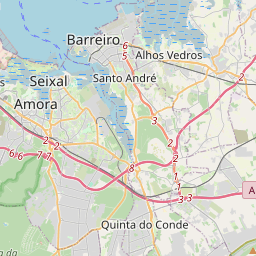
10 places to visit

The Belém Tower
The Belém Tower, built between 1514 and 1520 on the orders of King Manuel I to defend the entrance to Lisbon's harbor on the Tagus, was designed by architect Francisco de Arruda in the Manueline style, Portugal's flamboyant variant of late Gothic blending maritime motifs with Moorish influences. Named a UNESCO World Heritage Site in 1983 along with the neighboring monastery, it marked the symbolic starting point for Portuguese maritime expeditions to the Indies and Brazil, before the river's gradual silting pushed it several hundred meters from today's shoreline. Its lower dungeons, now submerged at high tide, served as a prison in later centuries, while its crenellated upper terrace offers a direct view of the 25 de Abril Bridge.
Tram 15E from downtown (Praça da Figueira) to Belém, 25 minutes, or the Cascais train from Cais do Sodré to Belém station.

The Jerónimos Monastery
The Jerónimos Monastery, whose construction began in 1501 on the orders of King Manuel I, was funded by an extraordinary 5% tax levied on all spices brought back from the Indies by Vasco da Gama's fleet — literally built with the gold of the spice trade that made Portugal's fortune during the Renaissance. An absolute masterpiece of the Manueline style, its double-tiered cloister vaults, carved with marine and exotic motifs of unmatched ornamental density, kept several generations of craftsmen busy over nearly a century of work. The church holds the tomb of Vasco da Gama himself, as well as that of the poet Luís de Camões, author of The Lusiads. The monastery survived almost intact through the devastating 1755 earthquake that leveled much of Lisbon.
Tram 15E, Mosteiro Jerónimos stop, 10 minutes on foot from the Belém Tower.


LX Factory
LX Factory has occupied, since 2008, the vast industrial grounds of a former textile and spinning complex founded in 1846 beneath the 25 de Abril Bridge; its conversion into a creative hub of offices, galleries, restaurants and independent shops made the site a symbol of Lisbon's urban regeneration after the 2008 financial crisis. Livraria Ler Devagar, set inside a former printing workshop across several levels with a bicycle suspended over the bookshelves, has become its most photographed attraction, while the street art murals covering the complex's brick walls are regularly refreshed. The Sunday market (LX Market) and the lively evening terraces beneath the massive pillars of the suspension bridge overhead make it one of the capital's trendiest neighborhoods.
Bus 714 or 728 from downtown, LX Factory stop, beneath the 25 de Abril Bridge.

Bairro Alto and Chiado
Bairro Alto, laid out from the 16th century on a grid plan that was ahead of its time in Europe, enjoyed its literary golden age at the turn of the 20th century in the neighboring Chiado district, where poet Fernando Pessoa was a regular at Café A Brasileira, in front of which his bronze statue now sits at a table. Ravaged by a major fire in 1988 that destroyed several historic blocks of the Chiado, the district was rebuilt to its original design under architect Álvaro Siza Vieira. Once night falls, Bairro Alto transforms into the epicenter of Lisbon nightlife, its hundreds of small, unmarked bars where people drink standing in the street creating a nonstop party atmosphere, while the historic Elevador da Glória funicular has linked the lower town to the district since 1885.
Elevador da Glória funicular from Praça dos Restauradores, or the green metro line, Baixa-Chiado station.


Praça do Comércio
Praça do Comércio, a vast rectangular square opening onto the Tagus, was built on the very site of the former Paço da Ribeira, the royal palace destroyed by the devastating 1755 earthquake and tsunami that killed as many as 60,000 Lisbon residents. Its reconstruction, led with methodical rigor by the Marquis of Pombal, gave rise to an orthogonal, earthquake-resistant urban plan revolutionary for its time (flexible timber structures called 'gaiola pombalina' that absorb tremors), which still shapes the entire Baixa downtown today. The monumental triumphal arch on Rua Augusta, completed only in 1873, marks the symbolic entrance to the square. It was here that King Carlos I and his heir were assassinated in 1908, hastening the monarchy's fall two years later.
Blue metro line, Terreiro do Paço station, right downtown on the banks of the Tagus.

Tram 28
The Elétrico 28, the iconic yellow wooden tram built by the Companhia Carris de Ferro de Lisboa in the 1930s and still running its original route, covers 6km through some of the capital's most picturesque and steepest neighborhoods, from Martim Moniz to Campo Ourique, climbing grades few other forms of urban transport could handle. Its narrow rails (a 900mm reduced metric gauge adopted to fit the tight geometry of the historic streets) and hairpin turns, where the tram literally brushes past the façades of houses in Alfama and Graça, have made it more than just a mode of transport — a genuine tourist attraction in its own right. The line remains the only affordable way to see all of Lisbon's historic hills in half an hour.
Board at the Martim Moniz or Campo Ourique terminus to be sure of a seat.

São Jorge Castle
São Jorge Castle, occupying the summit of the highest of Lisbon's seven hills since at least the 6th-century Visigothic era, was substantially reinforced by Moorish conquerors in the 9th century before being retaken in 1147 by King Afonso Henriques during the Siege of Lisbon, a founding episode of the Portuguese Reconquista carried out with the help of European crusaders en route to the Holy Land. The main royal residence until the 16th century, the fortress later fell into disuse and was seriously damaged by the 1755 earthquake, only regaining its current medieval appearance after major restoration work in the 1940s. Its eleven crenellated towers and esplanade now offer the most complete panorama over the city's red rooftops and the Tagus.
Bus 737 from Praça da Figueira, or a 15-20 minute uphill walk from the Baixa.

Alfama
Alfama, whose name derives from the Arabic 'al-hamma' (hot springs, referring to thermal baths from the Moorish era), is Lisbon's oldest neighborhood and one of the few to survive nearly intact through the devastating 1755 earthquake that destroyed most of the lower town — a reprieve owed to its stable rocky ground. This maze of steep alleys, largely spared from the rigid grid-plan Pombaline rebuilding that reshaped the rest of the capital after the disaster, has kept a unique medieval, working-class character. The historic birthplace of fado, a traditional Portuguese song steeped in saudade and inscribed on UNESCO's intangible heritage list in 2011, its tascas keep this musical tradition alive every night, a style born among sailors and the neighborhood's working class in the 19th century.
Blue or green metro line, Terreiro do Paço or Santa Apolónia station, then an uphill walk into the neighborhood.

The Lisbon Oceanarium
The Lisbon Oceanarium, built for the 1998 World Expo, whose theme 'The Oceans, a Heritage for the Future' celebrated the 500th anniversary of Vasco da Gama's voyage, was designed on a principle unique in the world: an immense 5-million-liter central tank representing the world's ocean, surrounded by four peripheral habitats recreating the ecosystems of the North Atlantic, Antarctica, the tropical Pacific and the Indian Ocean, letting visitors observe the same central waters from different angles on each floor. With over 8,000 specimens from 500 different species, including sea otters and manta rays swimming in a space with no visible glass thanks to curved, invisible glass walls, it remains one of Europe's most innovative aquariums.
Red metro line, Oriente station, in the Parque das Nações.

Sintra and the Palácio da Pena
Sintra, whose cooler mountain microclimate made it the Portuguese royal court's preferred summer residence as far back as medieval times, packs a density of romantic palaces onto its wooded hills unmatched anywhere in Europe, collectively named a UNESCO World Heritage Site in 1995. The Palácio da Pena, an extravagant, brightly colored palace completed in 1854 on the orders of prince consort Ferdinand II of Saxe-Coburg-Gotha, blends Neo-Gothic, Neo-Manueline and Neo-Islamic elements, perched atop the ruins of a former 16th-century Hieronymite monastery struck by lightning. The neighboring National Palace of Sintra and the esoteric Quinta da Regaleira estate, with its spiral initiation well, round out one of the richest day trips anywhere in Portugal.
Direct train from Rossio station (40 minutes), then bus 434 to reach the Palácio da Pena from Sintra station.
Partner links: NavorAI may earn a commission, at no extra cost to you.
Specialities to try
Pastel de nata
Lisbon's custard tart, best eaten warm with cinnamon.
Bacalhau à brás
Shredded salt cod with matchstick potatoes and scrambled egg.
Grilled sardines
Charcoal-grilled, especially in June during the city festivals.
Bifana
Pork sandwich marinated in garlic and white wine.
Ginjinha
Sour-cherry liqueur served at tiny bars in the centre.
Where to try them
Belém
The district of the famous custard tart, by the monastery.
Mercado da Ribeira
Cais do Sodré hall: morning market and chefs' counters.
Alfama & Mouraria
Small family tascas and fado evenings.
Our practical tips
Buy a rechargeable Viva Viagem card for metro/bus/tram/funiculars — much cheaper than single tickets, especially for Tram 28 and the funiculars.
Pack good shoes — Lisbon is built across seven hills, with slippery cobblestones and slopes everywhere, especially in Alfama and Bairro Alto.
Book your train to Sintra early in the morning — the palaces (especially Pena) often sell out by noon in peak season, buy tickets online.
Catch a fado performance at a small tasca in Alfama rather than a big touristy restaurant — the intimate atmosphere is far more authentic.
Try pastel de nata at the source, at Pastéis de Belém — warm and dusted with cinnamon, it's a world away from the mass-produced versions sold elsewhere.
Climb up to Miradouro da Senhora do Monte at sunset — the view over Alfama's rooftops and the illuminated castle is the finest in the city, far from the crowds.
Find your flight to Lisbon
Prices compared in one click.

Prepare your stay
Stay connected during your trip

Need an airport transfer?
Want freedom to explore?

Keep exploring


