

Italy
Amalfi Coast
The Amalfi Coast is Italy's most spectacular coastline and one of the most beautiful in the world, a UNESCO World Heritage Site. This 50km stretch of coastline between Sorrento and Salerno combines limestone cliffs plunging into a deep blue sea, colorful fishing villages clinging to the rocks, and terraced lemon gardens scenting the air. A living painting of unending beauty.
The Amalfi Coast's cuisine is that of sun-drenched Campania, generous and fragrant. Spaghetti alle vongole (fresh clams) and linguine ai frutti di mare (seafood), paired with artisanal limoncello distilled from the giant sfusato amalfitano lemons (a protected designation), are the coast's culinary signatures. Pizza napoletana (a UNESCO Intangible Heritage), mozzarella di bufala from Battipaglia and grilled fish round out a cuisine of unmatched simplicity and quality.
The Amalfi Coast is best experienced by boat and on foot, between secret coves and panoramic trails. The Sentiero degli Dei (Path of the Gods), linking Agerola to Positano, is the finest hike in southern Italy. Boat trips to sea caves, the island of Capri and the Li Galli archipelago are unforgettable experiences. The water-taxi service between villages is the most practical and pleasant way to explore the coast.
Practical tip: The coastal road is narrow and winding — expect traffic jams in July-August. The boat is often faster and more enjoyable than the road. Stay in Ravello or Praiano to avoid the crowds of Amalfi and Positano. Visit the coast in May-June or September-October for the best conditions.
What to do on the Amalfi Coast in 3 days?
Spend the first day at Amalfi, Atrani and Vietri sul Mare; the second at Minori, Ravello and the lemon gardens; the third at the Emerald Grotto, the Path of the Gods, Praiano and a day trip to Capri. This pace blends villages, hiking and a boat trip to Capri. Find these 10 places in order below, with practical details for each.
What budget should you plan for a trip to the Amalfi Coast?
Budget around €120-150 per day per person for activities, meals and transport (accommodation not included): €20-30 for a terrace meal, €2-5 for a SITA bus ride depending on distance, and €40-60 for a boat trip to Capri. It's one of Italy's most expensive coastlines.
When is the best time to visit the Amalfi Coast?
The best time is May-June or September-October, with warm seas and fewer crowds and traffic jams than in peak summer. Avoid July-August if possible: the narrow coastal road becomes completely gridlocked and prices soar.
How do you get around the Amalfi Coast?
The SITA bus runs the length of the coast (€2-5 depending on distance) but can be slow in peak season due to traffic. The water taxi between villages (Amalfi, Positano, Praiano) is often faster and more enjoyable, especially in summer.
Prices and hours are indicative — please verify before your visit.
Ideally, plan 3 days to explore Amalfi Coast. The best time to explore Amalfi Coast remains May to September. Do not miss Positano, Ravello, Emerald Grotto, the city's unmissable highlights — you can book your tickets directly online  →.
NavorAI Videos
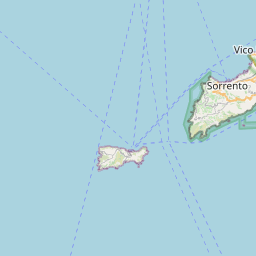
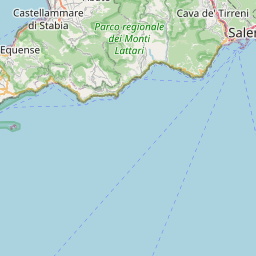
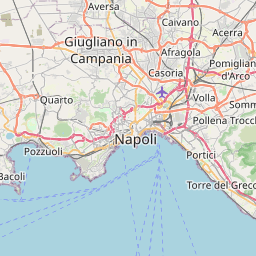
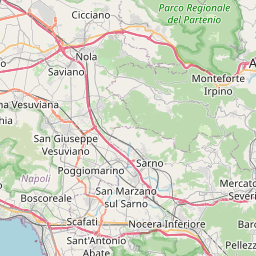


10 places to visit


Amalfi
Amalfi, which lent its name to the entire coast, was in the Middle Ages one of Italy's four Maritime Republics alongside Venice, Genoa and Pisa, and, according to local legend, the birthplace of the nautical compass, invented by navigator Flavio Gioia in the 13th century — a figure whose existence remains debated but whose statue still stands on the seafront. The city, then home to over 70,000 people and a commercial rival to Venice, was struck in 1343 by a tsunami triggered by an underwater landslide that swallowed much of the harbor, setting off a decline it never fully recovered from. Saint Andrew's Cathedral, whose monumental 62-step staircase and façade blending interlaced Arab-Norman arches with Byzantine mosaics attest to Amalfi's intense trade with the Arab world, houses in its crypt the relics of the apostle Andrew, brought from Constantinople in 1208.
SITA bus from Sorrento (1h15) or Salerno (1h10), or boat from Salerno/Positano/Capri in season.


Atrani
Atrani, separated from Amalfi by a single rocky headland and linked to its neighbor by a short road tunnel a few hundred meters long, is officially the smallest municipality in southern Italy, at barely 0.12km² — a village so compact that its main square, Piazza Umberto I, nestles directly beneath the surrounding houses like a shared communal patio. Long the secondary harbor and residential quarter for Amalfi's sailors and craftsmen during the Maritime Republic's golden age, it has kept an authentic, working-class character that its famous neighbor largely lost to mass tourism. The church of San Salvatore de Bireto, where the doges of Amalfi traditionally came to be invested with their office in the Middle Ages, still holds 11th-century Byzantine bronze doors brought from Constantinople.
5 minutes on foot east of Amalfi through a road tunnel, or SITA bus, Atrani stop.

Vietri sul Mare
Vietri sul Mare, at the eastern gateway to the Amalfi Coast on the Salerno side, is the world capital of Mediterranean ceramics, a tradition documented since the 15th century that hit its golden age in the 20th century when German artists fleeing Nazism brought in modernist techniques and motifs that revolutionized traditional local production. Its workshops produce brightly colored ceramic tiles and objects (sun-yellow, cobalt blue, emerald green) with floral and marine motifs that decorate the interior of virtually every house on the coast, from church domes to public benches. The Ceramica Artistica Solimene, a workshop-factory with a wave-shaped façade designed in 1954 by architect Paolo Soleri, a disciple of Frank Lloyd Wright, remains a masterpiece of modernist industrial architecture open to visitors.
SITA bus from Amalfi (30 minutes) or regional train from Salerno (10 minutes), at the eastern edge of the coast.

Minori
Minori, a coastal village between Amalfi and Maiori, was a favorite seaside retreat for the Roman aristocracy in antiquity, as shown by the remarkably well-preserved remains of a 1st-century AD seaside villa discovered right in the village center in 1932, its baths and frescoes still visible today in the open air amid modern houses. Nicknamed the 'city of pasta' for its centuries-old tradition of sun-dried pasta making — a craft passed down since the Middle Ages thanks to a microclimate particularly suited to drying — the village is still home to several family workshops carrying on this production using traditional methods. Its sandy beach, one of the widest on the Amalfi Coast compared to the rocky coves nearby, makes it a quieter alternative to Amalfi or Positano.
SITA bus from Amalfi (10 minutes) or a coastal walk via Atrani (30 minutes).

Ravello
Ravello, perched 350 meters above the coast on a rocky spur set apart from the coastal noise, is considered the most refined village on the coast, having drawn Wagner, Boccaccio, Virginia Woolf and Greta Garbo over the centuries in search of peace and quiet. The terraced gardens of Villa Rufolo, a 13th-century palace blending Norman, Moorish and Byzantine influences, directly inspired Richard Wagner's set for Klingsor's enchanted garden in his opera Parsifal in 1880, to the point that a Ravello Music Festival has been held there every summer since 1953 on a terrace suspended above the sea. The neighboring Villa Cimbrone, with its famous Terrace of Infinity lined with marble busts, offers one of the most breathtaking panoramas on the entire Amalfi Coast.
SITA bus from Amalfi (25 minutes, a winding road), terminus on Piazza Duomo.

The Lemon Gardens
The sfusato amalfitano lemon terraces, grown on chestnut-wood pergolas since the 9th century on the coast's steep slopes, stem from a farming system inherited from Benedictine monks, who built the first dry-stone terraces to hold the thin arable soil on these dizzying slopes, work carried on for over a thousand years. The sfusato amalfitano, an elongated lemon that earned European protected-origin status in 2013, is known for its thick, fragrant peel and near-total lack of acidity. The harvest, done by hand between February and October, still mobilizes entire families today, carrying crates of fruit on metal monorails suspended over the void, the only practical way to bring the crop down from the most remote terraces.
Guided tours departing from Amalfi or Ravello; trails through the Valle delle Ferriere reachable on foot from central Amalfi.

The Emerald Grotto
The Grotta dello Smeraldo, discovered by chance in 1932 by a local fisherman exploring the coast by boat, owes its otherworldly emerald color to a precise optical phenomenon: sunlight filtering through an underwater opening invisible at around 10 meters deep enters the cave from below and refracts through the water before bouncing back up onto the limestone ceiling, creating that unique electric-green hue. The cave, partly submerged by bradyseism (the slow shifting of volcanic ground typical of the Naples region), also holds an underwater ceramic Nativity scene installed in 1956, visible only to divers, though a lit replica adorns the section accessible by rowboat.
On the SS163 coastal road between Amalfi and Positano, 'Grotta dello Smeraldo' SITA bus stop, then an elevator or stairs down to the entrance.

The Path of the Gods
The Sentiero degli Dei, whose name comes from the legend that the Greek gods walked it to come to Ulysses's rescue against the sirens' song offshore, is considered Italy's most spectacular hike. This ancient mule track, used since antiquity as the only overland link between the coast's isolated villages before the coastal road was built in the 1850s, runs between 400 and 600 meters above the sea and connects the hamlet of Agerola-Bomerano to the tiny village of Nocelle, offering breathtaking views over the whole coast, Positano below and the island of Capri. The most iconic stretch, about 7.8km one way (3-4 hours of walking), requires good shoes but no major technical difficulty.
Start from Bomerano (SITA bus from Amalfi via Agerola), finish at Nocelle then descend to Positano.

Praiano
Praiano, just 5km from Amalfi but worlds apart in atmosphere, was in antiquity the summer retreat of the dukes of Amalfi, before becoming a quiet fishing and pasta-making village that has largely escaped the mass tourism that transformed its neighbors. Its two historic quarters, San Gennaro and San Luca, overlook the sea from terraces lined with bougainvillea, offering the same spectacular views as Positano at a fraction of the price. Marina di Praia beach, tucked into a narrow cove reached by around a hundred steps carved into the cliff and ringed by sea caves and old fishermen's huts turned into restaurants, is one of the most authentic on the entire Amalfi Coast, and was long a smugglers' haunt thanks to its natural concealment.
SITA bus from Amalfi or Positano (15-20 minutes), on the SS163 coastal road.

A Day Trip to Capri
Capri, the legendary island where Emperor Augustus and later his successor Tiberius settled for good starting in 27 AD, governing the Roman Empire remotely from their twelve sumptuous villas, is reachable by hydrofoil from Amalfi in about 1 hour. Villa Jovis, Tiberius's main residence perched at 334 meters on the island's eastern point, retains impressive remains despite the centuries and the story — likely exaggerated by the historian Suetonius, who was hostile to the emperor — that Tiberius had his enemies thrown from the cliff there. The Blue Grotto, where sunlight filtering under the water creates an otherworldly electric blue, is visited by small rowboat, lying flat in the bottom of the boat to pass through the narrow entrance. The Faraglioni, three limestone rocks rising from the sea, round out a memorable day.
Ferry or hydrofoil from Amalfi (about 1-hour crossing), several daily departures in season.
Partner links: NavorAI may earn a commission, at no extra cost to you.
Specialities to try
Limoncello
Liqueur from "sfusato amalfitano" lemons, served ice-cold.
Sfogliatella santa rosa
Flaky pastry with custard and sour cherries, born in Conca dei Marini.
Scialatielli
Fresh pasta of the coast, served with seafood.
Cetara anchovy colatura
Amber anchovy sauce of ancient origin, served on spaghetti.
Delizia al limone
Sponge dome soaked in lemon cream.
Where to try them
Amalfi town
Pastry shops and trattorias around the cathedral.
Cetara
Fishing village, capital of anchovies and colatura.
Ravello
Up on the hills, terraces and lemon products with a view.
Our practical tips
The SS163 coastal road is narrow and winding — the boat or the SITA bus are often faster and less stressful than driving in peak season.
Stay in Praiano or Atrani for excellent value — just minutes from Amalfi and Positano but far cheaper.
Book your Emerald Grotto or Capri trip for early morning — the sea is calmer and the caves less crowded before 10am.
Buy your limoncello directly from a lemon farm rather than a tourist shop — authentic quality at noticeably lower prices.
Walk the Sentiero degli Dei early in the morning in summer — the heat quickly becomes overwhelming on this exposed, shadeless trail.
Try the artisanal dried pasta from Minori, the 'city of pasta' — a local specialty far less famous than limoncello but just as authentic.
Find your flight to Amalfi Coast
Recommended airport: Naples.

Prepare your stay
Stay connected during your trip

Need an airport transfer?
Want freedom to explore?

Keep exploring


